
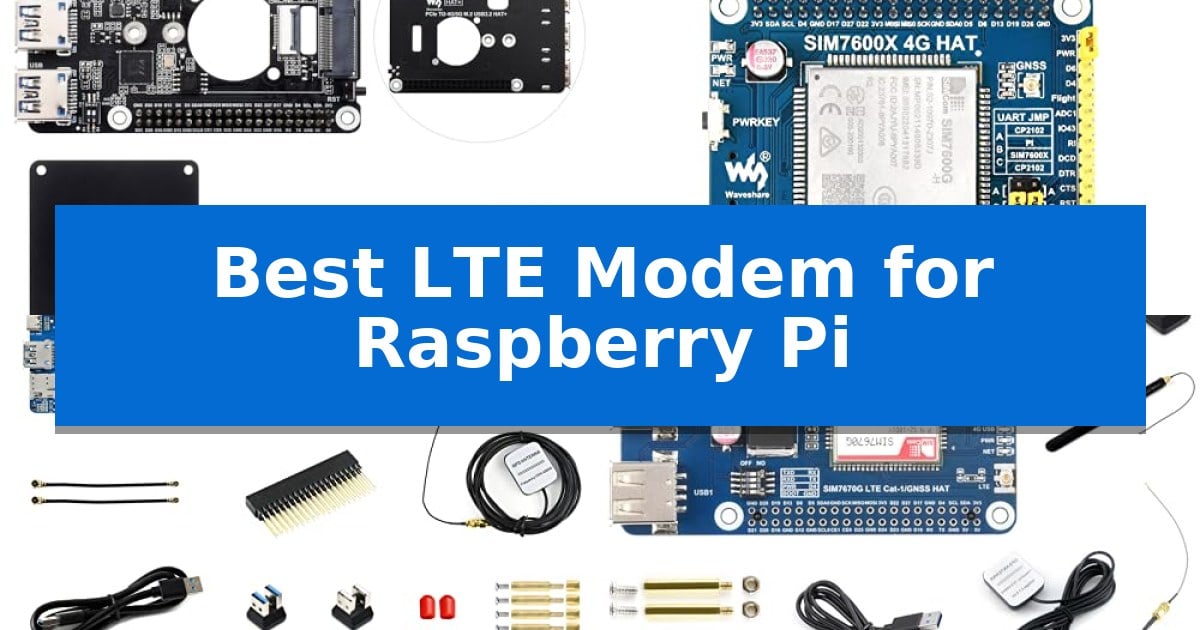
Integrating cellular connectivity into your projects opens up a world of remote monitoring and IoT potential. Finding the Best LTE Modem for Raspberry Pi requires balancing hardware compatibility with your specific networking needs, whether you are building a stationary gateway or a mobile sensor node.
Our guide evaluates current HAT and USB-based solutions to help you determine which module provides the most stable connection for your specific Raspberry Pi model. We focus on interface standards, power management, and antenna support to ensure your project stays online without unnecessary downtime.
You may also want to compare Best LTE Laptops, Best LTE Hunting Cameras, and Best LTE Hunting Camera.
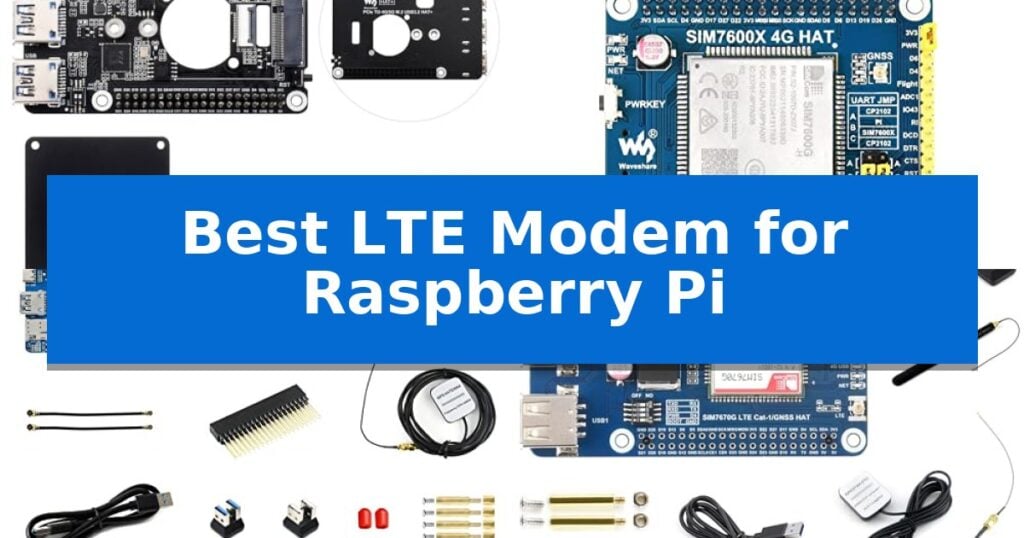
Best LTE Modem for Raspberry Pi
Quick Comparison
| Product | Best For | Key Strength | Score |
|---|---|---|---|
| Waveshare PCIe to M.2 4G/5G HAT | Best Overall | HAT+ standard compliance ensures reliable Raspberry Pi 5 integration. | 4.9 |
| Waveshare 4G/3G/2G GNSS HAT | Versatile global connectivity | Global multi-network support including 4G LTE Cat-4, 3G, and 2G. | 4.9 |
| Waveshare SIM7600G-H M.2 4G HAT | High-speed modular performance | Global multi-band support for 4G, 3G, and 2G networks. | 4.5 |
| Wonrabai SIM7670G LTE GNSS HAT | Efficient Cat-1 networking | Integrated GNSS positioning supporting four major satellite constellations. | 4.9 |
| Waveshare SIM7600G-H 4G USB Dongle | Plug-and-play industrial utility | Global 4G band support for worldwide network compatibility. | 4.6 |
How We Chose
- Hardware Compatibility: Verified support for Raspberry Pi GPIO headers and PCIe interfaces.
- Network Versatility: Assessed global band support and LTE category performance.
- Power Management: Analyzed onboard power monitoring and external power supply options.
- Interface Flexibility: Compared HAT-based GPIO integration against USB-based plug-and-play utility.
- Peripheral Expansion: Checked for additional USB ports and antenna management features.
1 Waveshare PCIe to M.2 4G/5G HAT — Future-proof 5G expansion
Integrating cellular connectivity into a Raspberry Pi 5 project requires a reliable interface that manages power and data efficiently. The Waveshare PCIe to M.2 4G/5G and USB 3.2 HAT provides a dedicated hardware solution, utilizing the HAT+ standard design with an onboard I2C EEPROM to ensure seamless communication with the Pi 5.
This expansion board features an onboard M.2 (NGFF) Key B slot, supporting a wide range of SIMCom and Quectel 4G/5G modules in both 3042 and 3052 packages. To maintain system stability, it includes an onboard power monitoring chip that allows for real-time measurement of voltage, current, and power consumption, which is critical when running high-draw cellular modems.
Beyond cellular capabilities, the HAT extends functionality by adding 3x high-speed USB 3.2 Gen1 ports, allowing for additional peripheral connections. The design prioritizes thermal management and ease of use, featuring a reserved airflow vent and mounting holes for a cooling fan, alongside a dedicated Type-C port for external power input or PC-based debugging and firmware updates.
The package includes a customized 5G-4IN1-PCB antenna that supports flexible installation on either the top or bottom of the board, facilitating cleaner wiring management. Integrated Reset buttons and status indicators for power and network activity provide immediate visual feedback, simplifying the debugging process for complex embedded networking setups.
Best for: Users building high-speed cellular networking projects on a Raspberry Pi 5 who require stable power monitoring and additional USB expansion.
Skip if: Users working with older Raspberry Pi models or those who do not require M.2-based cellular modules will find this HAT's specific form factor and interface unnecessary.
PROS
- HAT+ standard compliance ensures reliable Raspberry Pi 5 integration.
- Onboard power monitoring provides real-time voltage and current data.
- Three high-speed USB 3.2 Gen1 ports expand peripheral connectivity.
- Flexible antenna mounting options for improved wiring management.
CONS
- Specific form factor is optimized for Raspberry Pi 5, limiting compatibility with older models.
- Requires separate purchase of a compatible 4G/5G module.
2 Waveshare 4G/3G/2G GNSS HAT — Versatile global connectivity
Integrating cellular connectivity into a Raspberry Pi project requires a robust interface that handles both data and positioning. The Waveshare 4G/3G/2G GNSS HAT provides a comprehensive solution by utilizing a standard Raspberry Pi 40PIN GPIO header, ensuring broad compatibility across the Raspberry Pi series, including the 5, 4B, 3B, and Zero models.
This module is built around the SIM7600G-H, supporting LTE Cat-4 for high-speed data alongside 3G and 2G fallbacks for global coverage. Beyond simple internet access, it integrates GNSS positioning, supporting GPS, BeiDou, Glonass, GALILEO, QZSS, and LBS base station tracking. This makes it suitable for mobile projects requiring both network connectivity and location awareness.
For developers, the board includes an onboard USB interface for AT command testing and an integrated CP2102 USB-to-UART converter for serial debugging. It also features a dedicated SIM card slot and a TF card slot for local data storage. The inclusion of an audio jack and decoder allows for voice calls, while the configurable voltage translator supports both 3.3V and 5V logic levels, increasing its versatility for various host boards like Arduino or STM32.
Managing the connection is straightforward via AT commands, conforming to 3GPP TS 27.007 and 27.005 standards. With dual LED indicators for status monitoring and a wide baudrate range from 300bps to 4Mbps, the hardware is designed for flexible integration into custom automation, remote monitoring, or IoT deployments.
Best for: Developers needing a versatile, globally compatible cellular and GNSS module for Raspberry Pi-based IoT or remote monitoring projects.
Skip if: Users who only require basic Wi-Fi or Ethernet connectivity and do not have a specific need for cellular data or satellite positioning.
PROS
- Global multi-network support including 4G LTE Cat-4, 3G, and 2G.
- Integrated GNSS positioning covering multiple satellite constellations.
- Flexible hardware interfaces including USB, UART, and configurable 3.3V/5V logic.
- Broad compatibility with Raspberry Pi GPIO headers and other host boards.
CONS
- Requires external power management and antenna configuration for optimal signal stability.
- Complexity of AT command control may present a steeper learning curve for beginners.
3 Waveshare SIM7600G-H M.2 4G HAT — High-speed modular performance
Integrating cellular connectivity into embedded projects requires a reliable interface, and the Waveshare SIM7600G-H M.2 4G HAT provides a versatile solution by leveraging an M.2 form factor to bring LTE CAT4 high-speed data to the Raspberry Pi ecosystem. This module is designed to handle global multi-band 4G, 3G, and 2G coverage, ensuring broad network compatibility for remote deployments.
The board features a USB 3.1 port that maintains backward compatibility with USB 2.0, allowing for high-speed communication with various host boards including the Raspberry Pi 5, 4B, 3B, and the Jetson Nano. For developers requiring precise location tracking, the integrated GNSS positioning supports GPS, Beidou, Glonass, Galileo, QZSS, and LBS base station services, making it suitable for mobile or outdoor projects.
Usability is enhanced through thoughtful hardware design, including an onboard USB-C connector with a dedicated switch for stable, flexible power delivery, capable of supporting higher loads. The module also includes an onboard audio jack and decoder for voice operations, alongside a high-efficiency power supply circuit that provides up to 3A output current.
Managing the connection is straightforward thanks to the onboard power switch, reset button, and status LEDs. The HAT offers significant physical flexibility with four SMA to IPEX antenna interfaces, two of which come pre-soldered, allowing users to customize antenna placement based on their specific enclosure or mounting requirements.
Best for: Developers and hobbyists needing reliable, global 4G LTE connectivity and GNSS positioning for Raspberry Pi-based IoT or remote monitoring projects.
Skip if: Users who do not require cellular data or GPS capabilities and would prefer a simpler, lower-cost network solution like standard Wi-Fi or Ethernet.
PROS
- Global multi-band support for 4G, 3G, and 2G networks.
- Integrated GNSS positioning covering multiple satellite constellations.
- Flexible USB-C power input for stable operation under load.
- High-speed USB 3.1 interface compatible with various host boards.
CONS
- Requires external antenna management and physical mounting space for the SMA connectors.
- Increased complexity compared to simple HATs due to the multi-functional audio and power switching features.
4 Wonrabai SIM7670G LTE GNSS HAT — Efficient Cat-1 networking
Integrating cellular connectivity into your projects is simplified with the Wonrabai SIM7670G LTE GNSS HAT, which features a standard 40-pin GPIO header designed for direct compatibility with the Raspberry Pi series. This board provides a reliable bridge for LTE Cat-1 networking, offering uplink speeds up to 5Mbps and downlink speeds up to 10Mbps, making it a functional choice for remote data transmission.
Beyond basic connectivity, the module includes integrated GNSS positioning support for GPS, GLONASS, Galileo, and BeiDou. This dual-purpose design allows developers to track location data while simultaneously maintaining a network connection. The inclusion of three USB 2.0 extended ports further increases the utility of the HAT, allowing for additional peripheral connections without sacrificing the primary interface.
For industrial or IoT deployments, the board supports dial-up networking on both Windows and Linux systems via its USB interface. The manufacturer provides integration with the Waveshare.cloud platform, which includes tutorials and demo code using the lightweight MQTT protocol. This ecosystem support is intended to assist in setting up data visualization dashboards for various IoT monitoring scenarios.
The Wonrabai SIM7670G LTE GNSS HAT balances networking and positioning requirements within a compact form factor. By utilizing the standard GPIO layout, it ensures a straightforward physical installation for Raspberry Pi users, while the multi-band LTE support provides the necessary flexibility for global connectivity applications.
Best for: Users needing a compact, integrated solution for both LTE Cat-1 cellular networking and multi-constellation GNSS positioning on a Raspberry Pi.
Skip if: Users requiring high-speed broadband connectivity, as this module is limited to LTE Cat-1 specifications.
PROS
- Integrated GNSS positioning supporting four major satellite constellations.
- Standard 40-pin GPIO header ensures broad compatibility with Raspberry Pi models.
- Three onboard USB 2.0 ports for peripheral expansion.
- Supports MQTT protocol for streamlined IoT data visualization.
CONS
- LTE Cat-1 speed limitations may not be sufficient for high-bandwidth applications.
5 Waveshare SIM7600G-H 4G USB Dongle — Plug-and-play industrial utility
Integrating reliable cellular connectivity into industrial or embedded projects requires hardware that balances broad network support with versatile interface options. The Waveshare SIM7600G-H 4G USB Dongle addresses this by providing a compact, industrial-grade solution capable of handling 2G, 3G, and 4G global bands, making it a flexible choice for diverse deployment environments.
Designed for seamless integration, this adapter features an onboard USB port for direct connection to ARM or x86 hosts, including the Raspberry Pi. For more specialized hardware requirements, it also includes an onboard UART port with hardware flow control, allowing for direct communication with microcontrollers like Arduino or STM32. The device supports a wide range of network protocols, including TCP/IP, FTP, and HTTP, which simplifies data transmission tasks for developers.
Beyond standard connectivity, the unit incorporates GNSS positioning capabilities, supporting GPS, Beidou, and Glonass for location-based applications. While an external antenna is required for this feature, the inclusion of a dedicated interface adds significant utility for mobile or remote projects. The hardware is housed in a portable, customized enclosure featuring three LED indicators, which provide immediate visual feedback on the current working status.
Compatibility is handled through provided drivers for Windows, Linux, and Android, ensuring the dongle can be utilized across various operating systems. With its support for 1.8V and 3V nano SIM cards and an auto-negotiating baud rate ranging from 9600bps to 115200bps, the Waveshare SIM7600G-H 4G USB Dongle offers a robust, plug-and-play approach to adding LTE functionality to industrial computers and single-board computers.
Best for: Industrial and embedded projects requiring global 4G connectivity and GNSS positioning on platforms like Raspberry Pi or Arduino.
Skip if: Users who do not have an additional GNSS antenna available for location tracking or those requiring a plug-and-play solution without any driver configuration.
PROS
- Global 4G band support for worldwide network compatibility.
- Dual interface options including USB and UART with hardware flow control.
- Integrated GNSS positioning support for GPS, Beidou, and Glonass.
- Compact, industrial-grade enclosure with clear status LEDs.
CONS
- GNSS antenna not included, requiring a separate purchase for positioning features.
- Driver installation required for full functionality across different operating systems.
Best LTE Modem for Raspberry Pi Buying Guide
Understanding HAT vs. USB Modems
The primary choice for a Raspberry Pi cellular setup is between a HAT (Hardware Attached on Top) and a USB dongle. A HAT typically connects directly to the 40-pin GPIO header or the PCIe interface, providing a cleaner, more integrated physical installation. This is ideal for permanent, space-constrained projects where you want to avoid loose cables.
Conversely, a USB modem offers superior portability and ease of use. These devices are essentially plug-and-play, making them perfect for rapid prototyping or switching between different host computers. However, they occupy a USB port and may require external cable management, which can be a drawback in industrial or tightly packed enclosures.
Global Band Support and LTE Categories
Cellular modems are not universal; they rely on specific frequency bands to communicate with carrier towers. If your project is intended for global deployment, ensure the modem supports a wide range of global bands. This prevents connectivity issues when moving between different regions or carriers.
LTE categories define the theoretical maximum speeds of your connection. A Cat-1 modem is often sufficient for low-bandwidth IoT data, such as sensor telemetry, while Cat-4 or higher is necessary for applications requiring faster throughput or more responsive data transmission. Match the category to your project's data demands to optimize costs.
Power Requirements and Stability
Cellular modules can be power-hungry, especially during peak transmission. A common point of failure in Raspberry Pi projects is insufficient power delivery to the modem. Look for HATs that feature onboard power monitoring or dedicated power inputs, such as a USB-C port, to ensure the module receives stable voltage under load.
Using a high-quality power supply for your Raspberry Pi is essential when adding a cellular modem. If the modem draws too much current, it can cause the Pi to reboot or the connection to drop. Always verify the power specifications of your chosen module against your Pi's power budget.
Antenna Placement and Signal Quality
Signal strength is heavily dependent on antenna placement. Most HATs include SMA or IPEX antenna interfaces, allowing you to position antennas away from the interference of the Raspberry Pi's own electronics. Proper antenna orientation can significantly improve your connection stability in weak signal areas.
For projects inside metal enclosures, you must use external antennas. Ensure your chosen modem supports the necessary antenna connectors and that you have the appropriate cabling to route the signal outside the enclosure. A well-placed antenna is often more important than the modem's raw speed capabilities.
GNSS and Positioning Features
Many cellular modems include integrated GNSS (Global Navigation Satellite System) capabilities, supporting GPS, BeiDou, and Glonass. This is invaluable for mobile projects, asset tracking, or applications requiring precise location data. If your project involves movement, prioritize a modem with built-in GNSS.
Keep in mind that GNSS functionality often requires a dedicated antenna. Check if your modem kit includes a secondary antenna for satellite positioning, as using a cellular antenna for GNSS can result in poor signal acquisition and inaccurate location reporting.
Frequently Asked Questions
Do I need a specific driver for these modems?
Most of these modems are recognized as standard serial or network devices on Linux-based systems like Raspberry Pi OS. However, you may need to configure the connection using AT commands or specific network managers.
Can I use a 5G HAT with a Raspberry Pi 4?
While some 5G HATs are designed for the Raspberry Pi 5's PCIe interface, they may offer limited functionality or require USB-based fallback on older Pi models. Always check the specific interface requirements.
Is a SIM card included with these modems?
No, these modems require a Nano-SIM card provided by your cellular carrier. You will need to ensure your data plan is compatible with the modem's supported network technologies.
How do I monitor the modem's status?
Many HATs feature onboard LED indicators for power and network status. Additionally, you can monitor the modem's performance and signal strength via software using AT commands.
Can these modems make voice calls?
Some models, such as the Waveshare 4G/3G/2G GNSS HAT, include an audio jack and decoder for voice functionality. Verify the specific product features if voice support is required for your application.
Conclusion: Our Top Pick
For projects requiring the most robust and future-ready connectivity, the Waveshare PCIe to M.2 4G/5G HAT stands out as the top choice. Its design specifically leverages the Raspberry Pi 5's PCIe interface, providing a high-speed, integrated solution that avoids the limitations of USB-based connections.
This HAT is ideal for users who need reliable cellular networking and want to maintain a clean, stackable hardware setup. While it is tailored for the latest Raspberry Pi generation, its support for various M.2 modules makes it a versatile foundation for advanced IoT and industrial applications where performance and stability are critical.