
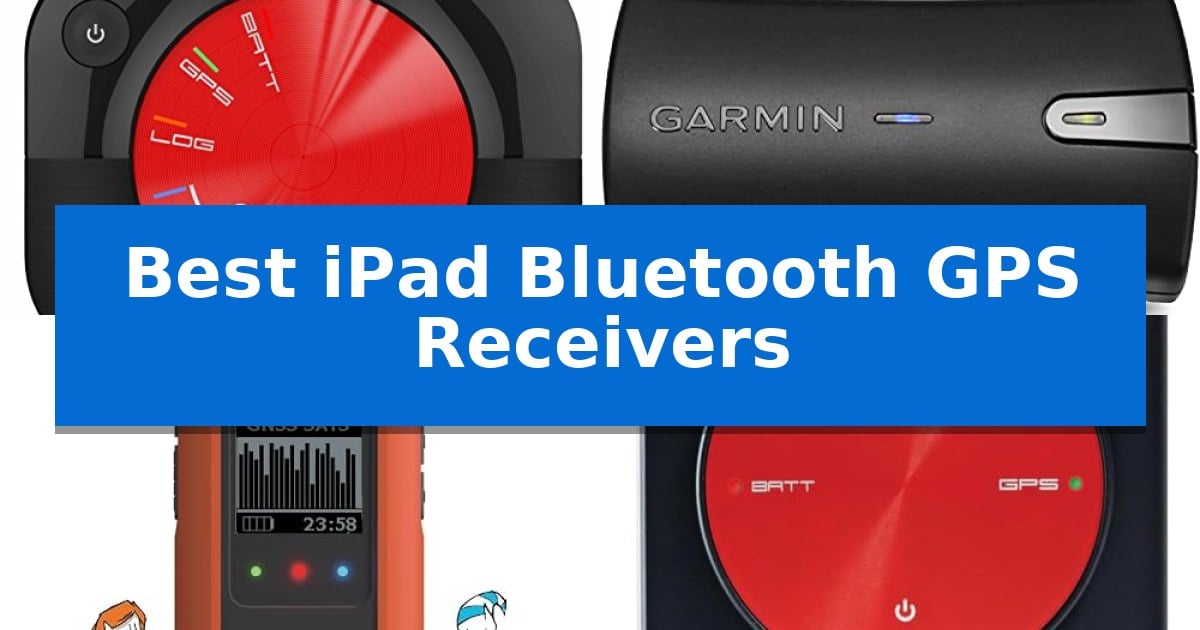
When your iPad lacks a built-in cellular GPS chip or you require higher precision than standard internal sensors provide, an external receiver becomes essential. These devices bridge the gap, ensuring your tablet maintains a consistent, high-accuracy location lock even in remote areas or high-speed environments.
Selecting the Best iPad Bluetooth GPS Receivers requires balancing your specific navigation needs against device compatibility and satellite constellation support. Whether you are a pilot needing reliable flight data or an off-road enthusiast tracking trails, the right external receiver transforms your tablet into a professional-grade navigation tool.
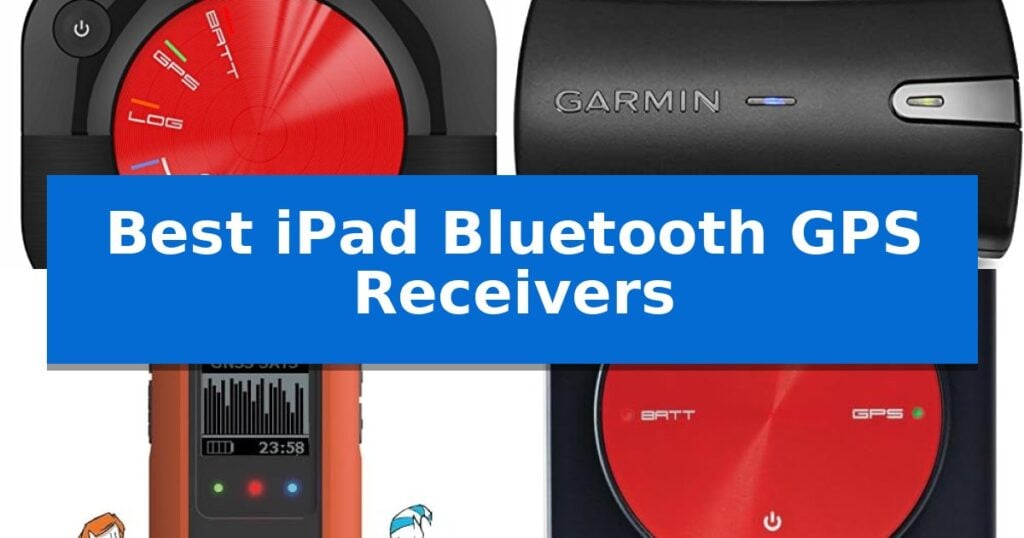
Best iPad Bluetooth GPS Receivers in 2026
Quick Comparison
| Product | Best For | Key Strength | Score |
|---|---|---|---|
| Dual Electronics XGPS160 GPS Receiver | Best Overall | Simultaneous connection for up to 5 devices via Bluetooth | 4.9 |
| Garmin GLO 2 GPS Receiver | Faster Satellite Lock Speeds | Dual-constellation support (GPS and GLONASS) for increased satellite connectivity. | 4.7 |
| Bad Elf Flex Mini GNSS Receiver | Professional Grade Accuracy | High accuracy of 1.5-2m in SBAS regions. | 4.8 |
| Dual Electronics XGPS150A GPS Receiver | Portable and Highly Compatible | High-precision WAAS enabled tracking for professional-grade accuracy. | 4.7 |
| Garmin GLO Portable GPS Receiver | Reliable Dual Constellation Tracking | Dual-constellation support (GPS and GLONASS) for increased satellite connectivity. | 4.4 |
How We Chose
- Satellite Constellation Support: Assessing the ability to track multiple systems like GPS, GLONASS, Galileo, and BeiDou for improved signal reliability.
- Update Frequency: Evaluating the position sample rate to ensure real-time tracking accuracy during high-speed movement.
- Device Compatibility: Verifying seamless Bluetooth pairing and certification for iOS devices.
- Battery Performance: Analyzing the duration of continuous operation on a single charge for field use.
- Form Factor and Mounting: Considering the physical footprint and included accessories for secure installation in vehicles or cockpits.
1 Dual Electronics XGPS160 GPS Receiver — Connects Up to Five Devices
The Dual Electronics XGPS160 provides a specialized solution for users requiring high-precision location data across multiple devices simultaneously. By utilizing a WAAS GPS receiver and supporting simultaneous GPS and GLONASS reception, this unit ensures robust satellite connectivity for demanding navigation tasks.
Designed for versatility, the device features Bluetooth connectivity to up to 5 devices at once, making it a practical choice for environments where multiple tablets or smartphones need to share a single, high-accuracy data stream. Its ability to provide up to 10 position samples per second offers a high update rate for tracking fast-moving targets or detailed route mapping.
The hardware includes automatic route recording, allowing for data logging directly on the receiver. With a compact footprint measuring just 2.2 by 2.7 inches and a weight of 7.2 ounces, the Dual Electronics XGPS160 is engineered for portability, fitting easily into various mobile setups without adding significant bulk.
This receiver is built for those who prioritize data accuracy and multi-device integration over simple internal hardware. While it requires a Bluetooth connection to function with an iPad, its dedicated processing capabilities offer a distinct upgrade for users who need consistent, high-frequency location updates in challenging environments.
Best for: Users who need high-frequency, multi-device GPS data sharing across several tablets or smartphones simultaneously.
Skip if: Users who only require basic location services for casual navigation and do not need external, high-update-rate GPS hardware.
PROS
- Simultaneous connection for up to 5 devices via Bluetooth
- High-frequency updates at 10 samples per second
- Dual satellite support including GPS and GLONASS
- Integrated automatic route recording
CONS
- Requires external Bluetooth pairing for all connected devices
- Adds an extra piece of hardware to your mobile setup
2 Garmin GLO 2 GPS Receiver — Faster Satellite Lock Speeds
Navigating remote areas or open water requires reliable positioning, and the Garmin GLO 2 Bluetooth GPS Receiver provides a dedicated solution for tablets that lack built-in satellite hardware. By pairing wirelessly with your iPad, this compact device offloads the positioning workload, ensuring your mapping applications receive consistent location data.
The Garmin GLO 2 Bluetooth GPS Receiver distinguishes itself by supporting both GPS and GLONASS satellite constellations. This dual-constellation capability allows the unit to track up to 24 more satellites than standard GPS-only receivers, which helps maintain a lock in challenging environments. It features a position update rate of up to 10 times per second, providing responsive tracking for high-speed movement.
Designed for portability, the unit measures roughly 3 inches in length and weighs less than a tenth of a pound. It includes a Li-ion battery pack providing up to 13 hours of battery life on a single charge, making it suitable for extended trips. The bundle also includes a vehicle power cable, ensuring the device remains operational during long drives.
Compatibility extends across various platforms, including iPad, iPhone, and other Bluetooth-enabled devices. It integrates with specialized navigation software such as BlueChart Mobile and Garmin SteelPilot Onboard. While the receiver enhances satellite acquisition speed by approximately 20%, users should note that the actual update rate may be limited by the specific host device being used.
Best for: Users who need high-precision, reliable GPS tracking on an iPad for marine navigation, off-road travel, or aviation.
Skip if: Users who already possess an iPad with built-in cellular GPS, as the internal hardware is typically sufficient for standard turn-by-turn navigation.
PROS
- Dual-constellation support (GPS and GLONASS) for increased satellite connectivity.
- Wireless Bluetooth connectivity for seamless pairing with iPads and other mobile devices.
- High update rate of up to 10 times per second for responsive tracking.
- 13-hour battery life supports long-duration use without constant recharging.
CONS
- Host device limitations may restrict the maximum position update rate.
- Requires external power or battery management compared to integrated GPS hardware.
3 Bad Elf Flex Mini GNSS Receiver — Professional Grade Accuracy
Achieving high-precision positioning on mobile devices requires reliable external hardware, and the Bad Elf Flex® Mini Standard GNSS Receiver provides a compact solution for users needing professional-grade location data. This device is specifically engineered to bridge the gap between standard tablet internal GPS and the requirements of mapping or surveying applications.
The Bad Elf Flex® Mini Standard GNSS Receiver is iOS certified, ensuring seamless integration with iPads and iPhones, while maintaining compatibility with Android and Windows platforms. It delivers a high accuracy of 1.5-2m in SBAS regions, which is a significant upgrade over typical consumer-grade hardware. This performance level is suitable for field data collection where reliable coordinates are essential for project integrity.
A standout capability of this receiver is its field upgradeable architecture. Users can transition from the standard configuration to enable RTK services, which allows the unit to achieve 1-foot or better accuracy. This flexibility makes it a scalable tool for professionals who may start with basic mapping needs but require higher precision as their project requirements evolve.
Measuring just 3.6 inches in height, the Bad Elf Flex® Mini Standard GNSS Receiver is designed for portability without sacrificing its core functionality. Its small, orange chassis is built to be carried easily in the field, making it a practical addition to a mobile kit for professionals working in remote or varied environments.
Best for: Professionals requiring high-accuracy GNSS data on mobile devices who may need to scale to RTK-level precision in the future.
Skip if: Users who only require basic, approximate location services for casual navigation and do not need professional-grade mapping accuracy.
PROS
- High accuracy of 1.5-2m in SBAS regions.
- Field upgradeable to support RTK services for 1-foot or better precision.
- iOS certified for reliable connectivity with iPad and iPhone.
- Compact, portable design suitable for field use.
CONS
- Requires separate upgrade to access RTK-level accuracy features.
4 Dual Electronics XGPS150A GPS Receiver — Portable and Highly Compatible
Navigating remote areas or managing critical missions often requires more precision than standard internal sensors can provide. The Dual Electronics XGPS150A GPS Receiver addresses this by acting as a high-accuracy external bridge, instantly strengthening your GPS signal for iPad, iPhone, Android, Mac, or Windows devices.
This water-resistant receiver connects via Bluetooth in seconds, allowing you to transform any mobile device into a professional-grade navigator. It integrates seamlessly with the free GPS Status Tool app to deliver consistent, real-time position updates, ensuring you maintain a stable signal even when internal hardware struggles to lock on.
Designed for portability and extended use, the unit features an 8.5-hour continuous battery life. The package includes a comprehensive accessory kit with a USB charging cable, an adjustable wearable strap, and a secure non-slip pad. This pad is specifically engineered to mount onto vehicle dashboards, boat consoles, or cockpits, keeping the device firmly in place during travel.
Reliability is further supported by an extended 2-year warranty option, provided you register the product after purchase. By offloading the positioning task to this dedicated hardware, you ensure that your navigation remains accurate during flights, off-road trips, or any mission where reliable tracking is a necessity.
Best for: Users needing high-precision, reliable GPS tracking for navigation on tablets and mobile devices in remote or challenging environments.
Skip if: Users who primarily navigate in urban areas with strong cellular and internal GPS signals may find the additional hardware unnecessary.
PROS
- High-precision WAAS enabled tracking for professional-grade accuracy.
- Universal compatibility across iOS, Android, Mac, and Windows platforms.
- Comprehensive accessory kit including a non-slip dashboard mount and wearable strap.
- Extended 2-year warranty available through product registration.
CONS
- Requires external power or battery management for trips exceeding 8.5 hours.
- Bluetooth dependency means it must remain within range of the connected device.
5 Garmin GLO Portable GPS Receiver — Reliable Dual Constellation Tracking
Achieving precise navigation on an iPad often requires more than the internal hardware can provide, especially when signal reliability is paramount. The Garmin 010-01055-15 GLO Portable GPS and GLONASS Receiver addresses this by utilizing dual-constellation tracking to enhance position accuracy for mobile devices.
This receiver connects wirelessly to iPads, iPhones, and other Bluetooth-enabled tablets, allowing the host device to leverage external satellite data. By accessing both GPS and GLONASS constellations, the Garmin GLO Portable GPS Receiver can connect to up to 24 more satellites than standard GPS-only devices. This capability is engineered to lock onto satellites approximately 20% faster and maintain a stable connection even at high speeds.
Designed for portability, the unit includes a li-ion battery pack that offers up to 12 hours of operation on a single charge. It supports a position update rate of up to 10 times per second, though this performance is ultimately dependent on the host device's limitations. The package includes a vehicle power cable and a USB cable, ensuring the device remains powered during extended travel.
Compatibility is a core strength of this receiver, as it integrates with various navigation and mapping applications such as BlueChart Mobile, Fishing My-Cast, and Garmin SteelPilot Onboard. Its compact form factor—measuring 2.6 inches in height and 5.3 inches in width—makes it a practical addition to a mobile navigation setup without adding significant bulk.
Best for: Users who require high-precision, reliable satellite positioning for aviation, marine, or outdoor navigation on their iPad or other mobile tablets.
Skip if: Users who only require basic location services for casual city navigation, as the internal GPS of modern iPads is sufficient for most standard mapping applications.
PROS
- Dual-constellation support (GPS and GLONASS) for increased satellite connectivity.
- Wireless Bluetooth connectivity for seamless integration with iPads and smartphones.
- Up to 12 hours of battery life for long-duration use.
- Faster satellite lock-on times compared to standard GPS-only receivers.
CONS
- Update rate limitations may occur depending on the capabilities of the connected host device.
Best iPad Bluetooth GPS Receivers Buying Guide
Understanding GNSS and Satellite Constellations
Modern GPS receivers often utilize multiple satellite constellations, including GPS, GLONASS, Galileo, and BeiDou. By accessing a broader network of satellites, these devices can achieve a faster and more stable lock, especially in challenging environments like deep canyons or dense urban areas where signals might otherwise be obstructed.
For users who require the highest level of precision, look for receivers that support WAAS (Wide Area Augmentation System). This technology corrects signal errors caused by atmospheric conditions, providing significantly more accurate positioning than standard consumer-grade hardware.
The Importance of Update Rates
The update rate refers to how many times per second the receiver calculates your position. While standard devices might update once per second, professional-grade receivers often offer 10Hz (10 samples per second) updates. This high frequency is critical for aviation and high-speed racing, where even a slight delay in position reporting can lead to navigation errors.
When choosing a receiver, ensure the host device (iPad) can support the data throughput of the receiver's update rate to avoid bottlenecks in your navigation software.
Bluetooth Connectivity and Multi-Device Support
Bluetooth is the standard for connecting external receivers to an iPad. However, the quality of the connection matters. Some advanced receivers allow for simultaneous connection to multiple devices, which is ideal for cockpit environments where both a pilot and a co-pilot may need access to the same GPS data stream.
Always verify that the receiver is iOS certified or explicitly compatible with Apple's Bluetooth stack to ensure a stable, drop-free connection during critical operations.
Battery Life and Power Management
Since these receivers operate independently of the iPad's internal power, their battery life is a primary constraint. For long-distance travel or extended field work, look for units offering at least 8 to 12 hours of continuous runtime.
Many receivers include a vehicle power cable or support USB charging, which allows you to keep the device powered indefinitely when used in a car, boat, or aircraft, effectively removing battery life as a limiting factor.
Physical Durability and Mounting Options
The environment in which you use your GPS receiver dictates the required durability. If you are mounting the device on a dashboard or in an open cockpit, look for water-resistant designs and secure mounting accessories like non-slip pads or wearable straps.
A compact, lightweight design is generally preferred to minimize clutter, but ensure the unit is robust enough to withstand the vibrations and temperature fluctuations common in mobile navigation setups.
Frequently Asked Questions
Do I need an external GPS receiver if my iPad has cellular?
While cellular iPads have built-in GPS, an external receiver often provides higher update frequencies, better satellite signal acquisition in remote areas, and improved accuracy through WAAS support.
Can these receivers connect to Android devices?
Many of the listed receivers are designed for universal compatibility and will work with Android and Windows devices in addition to iOS, though you should verify specific model support.
What is the difference between GPS and GNSS?
GPS is the American satellite system, while GNSS (Global Navigation Satellite System) is the umbrella term for all global satellite constellations, including GLONASS, Galileo, and BeiDou.
How do I know if my navigation app supports external GPS?
Most professional navigation apps for aviation and marine use automatically detect and utilize data from paired Bluetooth GPS receivers once they are connected to the iPad.
Will a high update rate drain my iPad battery faster?
The update rate primarily affects the power consumption of the GPS receiver itself. The iPad's battery impact is generally minimal, as the connection is handled via low-energy Bluetooth protocols.
Conclusion: Our Top Pick
For users seeking the most versatile and robust solution, the Dual Electronics XGPS160 GPS Receiver stands out as the premier choice. Its ability to connect to up to five devices simultaneously makes it an exceptional tool for shared navigation environments, while its high-frequency 10Hz update rate and support for both GPS and GLONASS ensure reliable, precise tracking in nearly any condition.
While other models offer specific advantages like faster initial lock speeds or professional-grade accuracy, the XGPS160 provides the most balanced feature set for a wide range of mobile applications. Its combination of multi-device support, automatic route recording, and WAAS precision makes it a dependable upgrade for any iPad-based navigation setup.