
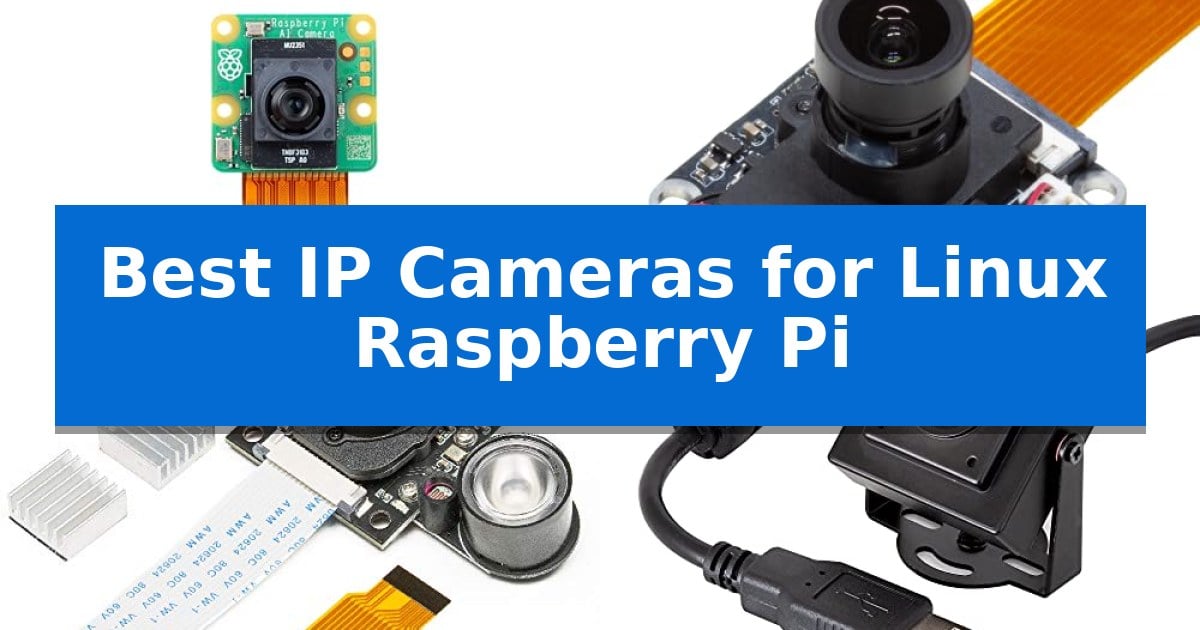
Building a custom surveillance or computer vision system requires hardware that integrates seamlessly with your existing Linux environment. Finding the Best IP Cameras for Linux Raspberry Pi involves balancing sensor capabilities, interface compatibility, and the specific processing demands of your project.
Whether you are developing an AI-driven monitoring station or a simple remote security feed, the right camera module can significantly reduce setup complexity. We have analyzed five distinct options to help you determine which hardware best aligns with your technical requirements and project goals.
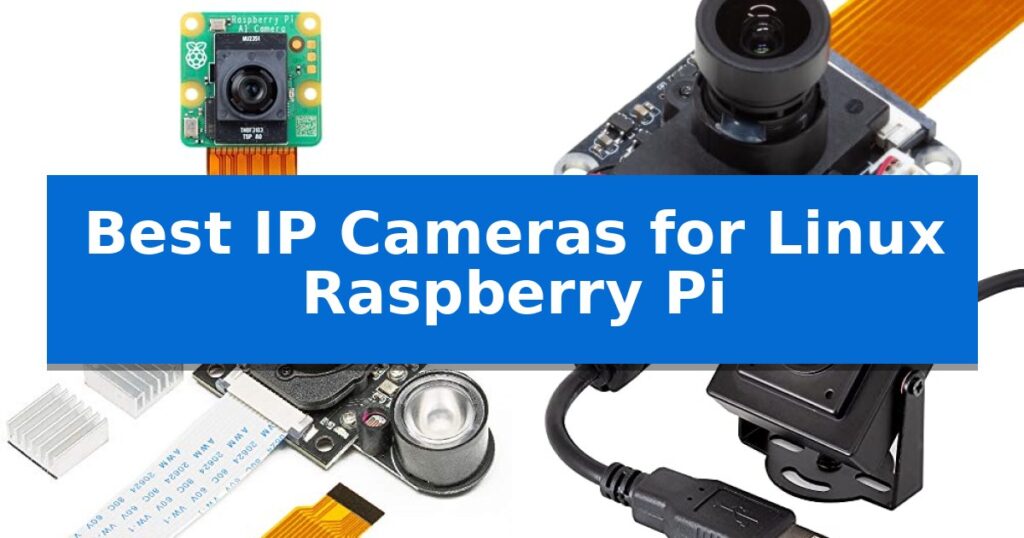
Best IP Cameras for Linux Raspberry Pi in 2026: Intelligent Vision
Quick Comparison
| Product | Best For | Key Strength | Score |
|---|---|---|---|
| Raspberry Pi AI Camera | Best Overall | Integrated neural network accelerator for efficient local AI inference. | 4.9 |
| Arducam STARVIS Camera Module | Superior Low Light Performance | Native Raspberry Pi support via MIPI CSI-2 interface for low-latency operation. | 4.7 |
| Arducam Day-Night Vision Camera | Automatic IR-Cut Switching | Automatic IR-Cut switching for accurate color reproduction. | 4.6 |
| Arducam 4K Autofocus USB Camera | Sharp Millimeter-Level Focus | UVC-compliant plug-and-play compatibility with Linux and Raspberry Pi. | 4.8 |
| Arducam IMX477 HQ Camera | High-Resolution Manual Focus | High 12.3MP resolution for detailed image capture. | 4.7 |
How We Chose
- Interface compatibility with MIPI CSI-2 or USB standards.
- Sensor performance in varying lighting conditions.
- Support for native Linux drivers and software stacks.
- Integration potential for machine learning and computer vision tasks.
- Physical form factor and mounting versatility.
1 Raspberry Pi AI Camera — Integrated Neural Network Processing
The Raspberry Pi AI Camera integrates a 12.3 MP Sony IMX500 Intelligent Vision Sensor directly with a neural network accelerator, allowing for onboard machine vision processing without relying on external cloud resources. This architecture is designed to offload complex computational tasks from the host processor, making it a specialized tool for projects requiring real-time image analysis.
At the core of its performance is an integrated low-power inference engine paired with an RP2040 microcontroller for firmware and neural network management. The camera arrives pre-loaded with a MobileNet machine vision model, enabling immediate deployment for object detection tasks. Users can capture high-resolution imagery at 4056×3040 at 10fps or prioritize fluid motion with 2028×1520 at 30fps.
The device features a 76-degree field of view and provides manually adjustable focus, offering precise control over the depth of field for specific monitoring or automation applications. It connects to any Raspberry Pi computer using the supplied 200mm cables, ensuring broad compatibility across the ecosystem for diverse hardware configurations.
While the camera excels in local AI processing, its manual focus mechanism requires physical adjustment during setup, which may be less convenient for dynamic environments compared to autofocus alternatives. Its design prioritizes computational efficiency and direct integration with Raspberry Pi hardware, serving as a dedicated component for developers building intelligent vision systems.
Best for: Developers and creators building local, low-latency machine vision and object detection applications on the Raspberry Pi platform.
Skip if: Users who require a plug-and-play surveillance camera with autofocus or those who do not need integrated neural network acceleration for their specific project.
PROS
- Integrated neural network accelerator for efficient local AI inference.
- Pre-loaded MobileNet model enables immediate out-of-the-box functionality.
- Broad compatibility with all Raspberry Pi computers via supplied cabling.
- High-resolution sensor capable of 4056×3040 output.
CONS
- Manual focus adjustment requires physical interaction, limiting remote focus control.
- Specialized hardware may be overkill for simple video streaming applications.
2 Arducam STARVIS Camera Module — Superior Low Light Performance
Achieving high-fidelity monitoring on a Raspberry Pi requires hardware that integrates directly with the system's native software stack. The Arducam STARVIS Camera Module simplifies this by utilizing the high-speed MIPI CSI-2 interface, ensuring it works immediately with Raspberry Pi OS and libcamera without the need for complex firmware flashing.
This module is built around a STARVIS back-illuminated sensor, which is specifically engineered to maintain image clarity in extremely low-light environments. For users requiring 24/7 surveillance or wildlife observation, the camera includes an onboard DIP switch for manual IR-cut filter control, allowing for seamless transitions between daytime color imaging and nighttime infrared monitoring.
The hardware is designed for broad situational awareness, featuring a 102° wide-angle lens that minimizes blind spots in smart home or robotics setups. By outputting 1080P Full HD video, it provides the necessary bandwidth for machine learning and computer vision tasks while maintaining the low-latency performance expected from a native MIPI CSI connection.
Compatibility is a core strength of this module, as it is fully supported across the Raspberry Pi 5, 4, 3, and Zero 2 W platforms. Whether you are deploying an AI vision system or a standard security feed, the Arducam STARVIS Camera Module offers a streamlined, driver-ready solution for Linux-based projects.
Best for: Users needing a low-light capable, native MIPI CSI camera for Raspberry Pi-based surveillance or computer vision projects.
Skip if: Users who require a USB-based plug-and-play webcam or those who need a motorized pan-tilt-zoom (PTZ) mechanism.
PROS
- Native Raspberry Pi support via MIPI CSI-2 interface for low-latency operation.
- STARVIS sensor technology provides superior performance in low-light conditions.
- Manual IR-cut control allows for flexible day and night monitoring.
- 102° wide-angle lens reduces blind spots for broader scene coverage.
CONS
- Manual DIP switch requires physical access to toggle IR-cut modes.
- Fixed-focus lens may limit versatility for macro or long-distance applications.
3 Arducam Day-Night Vision Camera — Automatic IR-Cut Switching
Integrating a reliable camera into a Linux-based Raspberry Pi project requires hardware that bridges the gap between standard hobbyist components and functional surveillance needs. The Arducam Day-Night Vision Camera addresses this by incorporating an automatic IR-Cut filter, which physically switches to ensure color accuracy during the day and high-contrast monochrome imaging at night without the pink-tinted artifacts common in standard NoIR modules.
Designed for broad compatibility, this camera supports a wide range of hardware, including the Raspberry Pi 5, 4, 3 B+, and Zero models. It integrates directly with standard Raspicam commands and Python scripts, allowing developers to build custom surveillance, motion detection, or time-lapse applications without needing proprietary software stacks. The inclusion of an IR LED illuminator further enhances low-light visibility, while the IR-corrected lens minimizes focus shift when transitioning between lighting conditions.
The module features an M12 lens mount, providing the flexibility to swap optics depending on the required field of view. To manage the thermal output of the IR LEDs during extended operation, the kit includes two dedicated heat sinks. With a compact form factor and a ribbon cable specifically for the Pi Zero, it serves as a versatile foundation for DIY security setups that require consistent performance across varying light levels.
Best for: DIY enthusiasts and developers building custom Linux-based surveillance or monitoring projects on a Raspberry Pi.
Skip if: Users requiring high-resolution 4K video or advanced features like motorized pan-tilt-zoom, which this fixed-lens 5MP module does not support.
PROS
- Automatic IR-Cut switching for accurate color reproduction.
- Broad Raspberry Pi model compatibility including the Pi 5.
- Interchangeable M12 lens system for custom focal lengths.
- Includes IR LED illuminator for improved night vision.
CONS
- Fixed-focus lens requires manual adjustment.
- Limited 5MP resolution compared to modern high-definition IP cameras.
4 Arducam 4K Autofocus USB Camera — Sharp Millimeter-Level Focus
Achieving precise visual monitoring on a Linux-based system requires hardware that integrates seamlessly without complex driver overhead. The Arducam 4K Autofocus USB Camera simplifies this by utilizing a UVC-compliant interface, allowing it to function as a plug-and-play device on Raspberry Pi and other Linux environments immediately upon connection.
At the core of this module is an 8MP IMX219 sensor, which delivers a maximum still resolution of 3264H x 2448V. This high pixel density provides the clarity necessary for detailed observation tasks, such as monitoring 3D printer progress or maintaining a home surveillance feed. The inclusion of an integrated microphone allows for simultaneous audio and video capture, expanding the utility of the device for interactive monitoring setups.
The standout feature is the autofocus capability, which eliminates the need for manual lens adjustments. This system automatically manages focus at both millimeter-level distances and long-range views, ensuring consistent sharpness without requiring physical tools. The camera is housed in a mini-sized metal case and includes a rotatable bracket, making it straightforward to mount on a wall, tripod, or flat desk surface.
Performance remains flexible based on the chosen resolution and format. It supports MJPG at 15fps for 3264 x 2448 or 30fps at 1080P/720P, while YUY2 mode supports 30fps at 640 x 480 or 800 x 600. With the provided 3.3ft/1m USB cable, the unit is ready for immediate deployment in compact, Linux-driven projects.
Best for: Users needing a high-resolution, autofocus-capable camera that integrates easily with Raspberry Pi via UVC standards.
Skip if: Users requiring high-frame-rate 4K video or advanced low-light performance, as this module is optimized for compact, general-purpose monitoring.
PROS
- UVC-compliant plug-and-play compatibility with Linux and Raspberry Pi.
- Autofocus sensor eliminates the need for manual lens adjustment.
- 8MP IMX219 sensor provides high-resolution image capture.
- Compact metal housing with a versatile rotatable mounting bracket.
CONS
- Limited frame rate at the maximum 8MP resolution.
- Fixed cable length of 1 meter may restrict placement in larger setups.
5 Arducam IMX477 HQ Camera — High-Resolution Manual Focus
Integrating high-resolution imaging into a Linux-based project requires hardware that offers both precision and broad compatibility. The Arducam IMX477 Pi HQ Camera addresses this by providing a 12.3MP sensor capable of a maximum still resolution of 4056(H) x 3040(V), ensuring sharp and detailed visual data for your Raspberry Pi applications.
This camera distinguishes itself with a versatile 6mm focal length CS lens, which allows for manual focus and adjustable aperture. These physical controls provide the flexibility needed to fine-tune image quality for specific environmental conditions or subject distances, removing the need to source additional optics separately.
Setup is streamlined through the inclusion of two specific cables: a 300mm 22-22pin cable for the Raspberry Pi 5 and Zero, and a 300mm 15-22pin cable for the Raspberry Pi 4B and 3B series. By following the provided configuration guide, users can integrate the device into their existing Linux environment, including specific overlay commands for the Raspberry Pi 5's dual camera ports.
Designed for wide system support, the unit is compatible with various boards including the Raspberry Pi 5, 4B, 3B+, 3B, 2, and the Zero series. This broad compatibility makes it a reliable choice for developers maintaining multiple hardware iterations within a single project ecosystem.
Best for: Developers requiring high-resolution manual focus imaging for Raspberry Pi-based projects.
Skip if: Users who require an autofocus lens or a plug-and-play solution without manual configuration.
PROS
- High 12.3MP resolution for detailed image capture.
- Includes a 6mm CS lens with manual focus and adjustable aperture.
- Wide compatibility across multiple Raspberry Pi models.
- Includes two cable types for immediate connectivity with different Pi boards.
CONS
- Requires manual configuration via user guide for first-time setup.
- Manual focus lens may be less convenient than autofocus alternatives.
Best IP Cameras for Linux Raspberry Pi Buying Guide
Interface and Connectivity
The connection method is the most critical factor when selecting a camera for your Raspberry Pi. Most dedicated modules utilize the MIPI CSI-2 interface, which provides high-bandwidth, low-latency data transmission directly to the processor. This is ideal for real-time video streaming and complex image processing tasks.
Alternatively, USB-based cameras offer a plug-and-play experience that is highly compatible with a wider range of Linux devices. While these may introduce slightly more latency than CSI-2 modules, they are often easier to deploy in projects where you need to quickly swap hardware or connect to multiple devices.
Sensor Capabilities and Low Light
Your choice of sensor dictates the quality of your footage, especially in challenging environments. Look for back-illuminated sensor technology if your project involves night monitoring or low-light conditions. These sensors are designed to capture more light, resulting in brighter and more detailed images where standard sensors might produce excessive noise.
For daytime surveillance, consider the resolution and field of view. A wider field of view helps reduce blind spots in stationary setups, while higher resolution sensors allow for better detail capture, which is essential if you need to identify objects or text within the frame.
AI and Processing Integration
Modern Raspberry Pi projects often require more than just video capture. If you are interested in object detection or automated alerts, look for cameras with integrated neural network accelerators. These modules offload the heavy lifting of inference from the main CPU, allowing for faster and more efficient processing.
Ensure the camera supports common machine vision models or frameworks. Pre-loaded software support can save significant development time, allowing you to focus on your application logic rather than debugging driver compatibility or firmware issues.
Focus and Optics
The ability to adjust focus is vital for projects that require monitoring at specific distances. Manual focus lenses provide the most control, allowing you to fine-tune the sharpness for a fixed scene. This is particularly useful for industrial or stationary home security setups.
For more dynamic environments, an autofocus module may be preferable. These systems automatically adjust to objects at varying distances, which is beneficial for robotics or handheld monitoring where the distance between the camera and the subject is constantly changing.
Environmental Adaptability
If you are building an outdoor or 24/7 monitoring system, consider features like automatic IR-cut switching. This mechanism ensures that your camera produces accurate colors during the day while maintaining visibility at night by switching to an infrared-sensitive mode.
Check the physical build quality and mounting options as well. A metal case or a robust bracket can protect the internal components from physical damage and provide a stable base for mounting the camera to walls, tripods, or custom enclosures.
Frequently Asked Questions
Do all these cameras work with Raspberry Pi 5?
Most modern Arducam and official Raspberry Pi modules are designed for broad compatibility, including the Raspberry Pi 5. Always check the specific pinout and driver requirements, as some may require specific configuration overlays.
Is a CSI-2 camera better than a USB camera?
CSI-2 cameras generally offer lower latency and better integration with the Raspberry Pi's native camera stack. USB cameras are typically easier to set up and more versatile across different hardware platforms.
Can I use these cameras for outdoor security?
Yes, but you must provide your own weather-resistant housing. The camera modules themselves are generally not waterproof and require protection from the elements.
What is the benefit of an IR-cut filter?
An IR-cut filter prevents infrared light from reaching the sensor during the day, which keeps colors looking natural. It is removed at night to allow infrared light in, enabling night vision capabilities.
Do I need to install special drivers?
Many of these modules are designed to work with the standard Linux libcamera stack or UVC drivers, meaning they often work without needing custom firmware flashing.
Conclusion: Our Top Pick
For users seeking the most advanced integration for computer vision and intelligent monitoring, the Raspberry Pi AI Camera stands out as the top choice. Its combination of a high-resolution sensor and an integrated neural network accelerator provides a powerful platform for developers looking to implement complex AI tasks directly on their hardware.
While other options offer excellent low-light performance or manual focus flexibility, the AI-specific features of this module make it the most future-ready solution for sophisticated Linux-based surveillance and vision projects.